





10 August, 2026
One for All and All for One: The Family Calendar
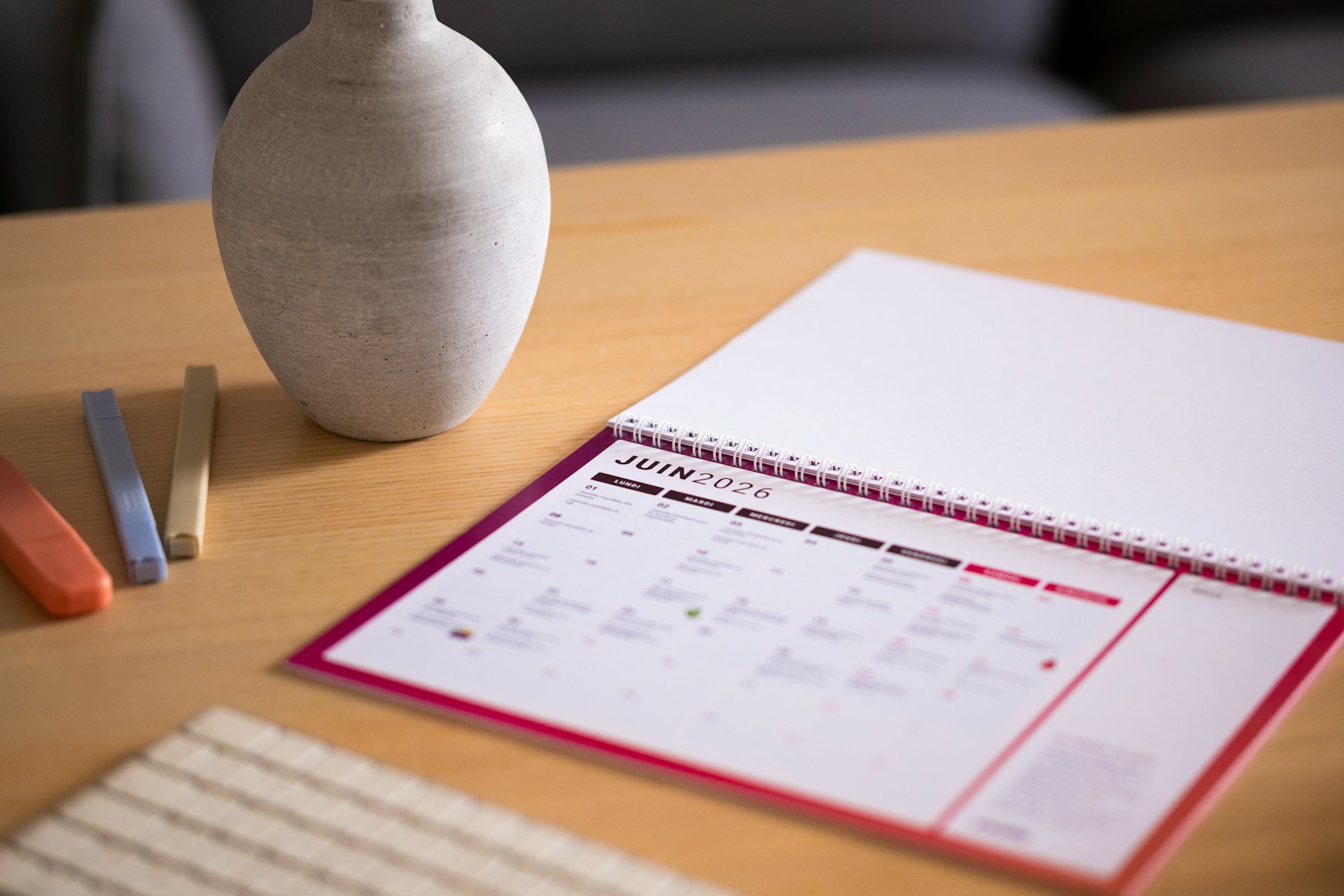
Since the dawn of time, many civilisations have tried to structure it. The 365-day solar calendars that the Egyptians invented sought to put the harvests in order, but few would have imagined that their idea would become one of the most useful tools for modern families.
Put it on the calendar!
On paper, digital, on a whiteboard… the format doesn’t matter; the important thing is that it is a method to ensure family harmony and, above all, that the organisational stress is not left to just one person, as is usually the case.
Preparing the calendar must be a group activity in order for the responsibility of the arrangements and appointments to be shared fairly. Each member of the family should be responsible for adding tasks and arrangements. You can sit down in weekly family meetings to go over them and which will also allow you to make decisions about your options together. Each family member will feel part of the planning and responsible for making it happen, even though the criterion of flexibility has to be well explained. After all, calendars are not written in stone and the idea that there are things that can be cancelled is also a learning opportunity: what it implies; who is put at a disadvantage: when it is polite to cancel something arranged and when cancelling is a lack of respect; the importance of not overestimating our ability to socialise…
And how should it be done?
To start, we have to find the way for everybody to understand that it is not just about social engagements. Everyone can use the calendar to note down structured activities, free time, housework and rest time, while always ensuring there is a balance. The youngest members of the family can use stickers, colours, drawings – whichever they prefer – so they feel their needs are also taken into account. The older members can write them down, but in an ordered way. Colours are very useful to establish to whom what belongs or to allocate a type of activity to them. Furthermore, if we use a paper calendar, it should be in a visible and communal place, such as the kitchen. You can also use post-its, which also have the advantage of being easily removable if the activity ends up not being done.
It is not about trying to fill in everything, but rather what really matters. Having blank spaces which people can use for their own time is highly recommended to avoid feeling under stress.
Leisure apart and together
Obviously, doctors’ appointments, family meals, birthdays and the trips of each family member should be written down, but what else should go on the calendar?
Well, family activities, for example, such as frequent ones and those that only happen once. You can arrange boardgames afternoons, time to prepare a specific dish or family movie night when each member takes it in turn to choose the film, or organise your own book club; but outings and trips should be noted down.
The idea of having a shared calendar is for it to be another aspect of getting all the family members to take part in the weekly routines and have quality time that everyone can share. You can even design your own one using an app and photos of each person, for example, of the person whose birthday is in a specific month. Have fun!


 Agenda