


3 November, 2026
How to Talk to Children About Beauty, Body and Self-Esteem
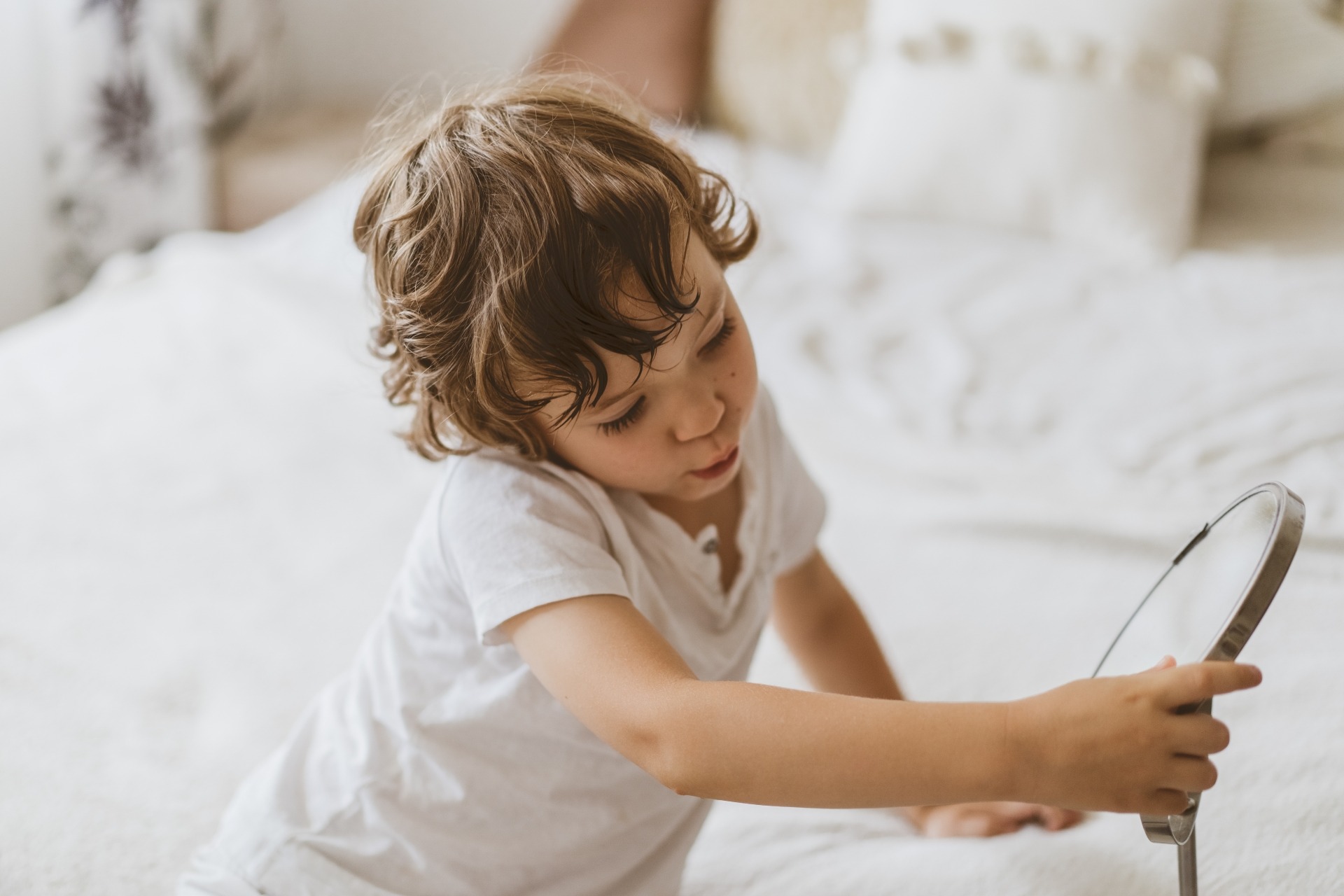
Self-esteem is as important as a critical mind when it comes to what society expects of bodies.
Beauty pressure has been an issue for years and, to a great extent, most of us can agree that it does us no good either individually or as a society; the constant comparison with an unachievable and, in many cases, unrealistic ideal is not good for any of us. So why are we still doing it? Wasn’t the 1990s and the glamorization of thinness enough?
It is a multifactorial problem, but in a world where beauty pressure begins earlier and earlier – largely influenced by screens, advertisements and toys – it is essential that home is a safe space for children to develop a healthy relationship with their bodies.
Why is it important to talk about body and beauty from an early age?
Alarmingly, we are sent messages about ‘how we must be’ from a very young age. According to a study with children aged between 4 and 6 by the Department of Physical Education, Art Education and Music of the University of Castilla-La Mancha, they begin to form ideas about the ‘ideal’ at that age, even though many still do not have a reliable perception of their body. They are sometimes influenced by what they hear from around them or from their parents, and they often aspire to be slimmer.
If we do not talk about it ourselves, others will do it for us: advertising, networks and the media will give their version and are often biased towards distressing stereotypes. Therefore, building a healthy body attitude at home helps protect against future complexes, insecurities or pressures.
What does educating for a healthy body attitude mean?
Educating for a healthy attitude implies teaching that all bodies are valid and changing; appreciating the body for what it does, not just for how it looks; learning to recognise harmful messages about beauty, and developing critical thinking in the face of stereotypes or idealized images. It also means relearning to enjoy the body for its functionality: running, jumping, playing, hugging, growing… Instead of just praising appearance, stress what the body lets you do. And, of course, it means loving diversity: shapes, sizes, colours, growth rates. Because no body is worth more than another, no matter how much society forces us to think otherwise. We are able to make decisions and have the ability to change this aspect.
Everyday conversations without great speeches
You don’t ne4d to sit down to ‘have a formal talk’ because there are thousands of small and loving opportunities in everyday life when you can raise awareness about and be critical of the beauty pressure to which, unfortunately, young children and, above all, young girls will be exposed.
- While getting dressed: You should talk about comfort, what they like, colours and appreciating what is good for them physically, instead of saying ‘this makes you look handsome/beautiful’. You need to avoid phrases that reinforce insecurities such as ‘this makes me look fat’ or ‘this looks awful on me’.
- While cooking or eating: Talking about food should be about energy and pleasure, and avoid classifying foods as ‘good’ or ‘bad’ and not linking bodies with labels such as ‘fat’ or ‘thin’.
- While getting ready to go out: Approach personal hygiene and care as ways of well-being. Drying your hair, washing, putting on cream… should not be seen as actions to hide ‘imperfections’, but to feel good, clean, comfortable. Something very important to do with language should be mentioned here: we should stop saying that our personal hygiene is about fixing something, as if there was something broken or wrong with our body or our face. Why not talk about ‘let’s have fun with our looks’, for example, or ‘let’s choose today our look for going outside’?
- In the bathroom or in front of the mirror: Talk naturally about the body: its growth, its hair, its smell, its changes. Explain that it is normal and that we all change. Encourage curiosity, respect and privacy and accept body diversity as being normal.
Empowering messages to repeat (and live)
- Your body is strong; it helps you do amazing things.
- All bodies are different and that is good.
- How you feel inside is what is important, not what others say.
And, at the same time, avoid phrases that can undermine self-esteem:
- Criticism of weight or body shape.
- Negative comments about your own body in front of children.
- Jokes or judging other people’s appearance.
Adapt it to different school ages
- Early childhood (3–7 years old): Children at this age appreciate what their body can do (run, jump, hug, play, climb…) more than how it looks. It is a good time to plant the idea of a functional and diverse body.
- Primary (8–12 years old): As they get older, they begin to notice comparisons, changes, and social comments. This is when it is essential to normalise that all bodies change, that diversity is valuable and to question the standards of beauty that appear in the media.
- Early and mid-adolescence: When social and media pressure intensifies, as recent studies on the impact of social media and idealized beauty have shown, self-esteem must be reinforced from within, critical thinking must be encouraged and communication must be kept open. What adolescents consume on social media and the time they spend at the mercy of the algorithm should also be controlled.
A body for a full life
Nowadays, talking about the body, beauty and self-esteem with children is not an option; it is a necessity. It does not require serious speeches or special moments, because it is rather about taking advantage of the small moments of everyday life to build trust and, of course, respect for others. Beauty is a way of looking at the world, not a size.
When we talk at home with curiosity and admiration for what our body can do, we are giving our sons and daughters the chance to grow up feeling good about who they are and with the ability to criticize what does not work in our society and, therefore, to change it.


 Agenda