





17 September, 2026
We explore the future of innovation and the impact of artificial intelligence at Futuros Inspiradores
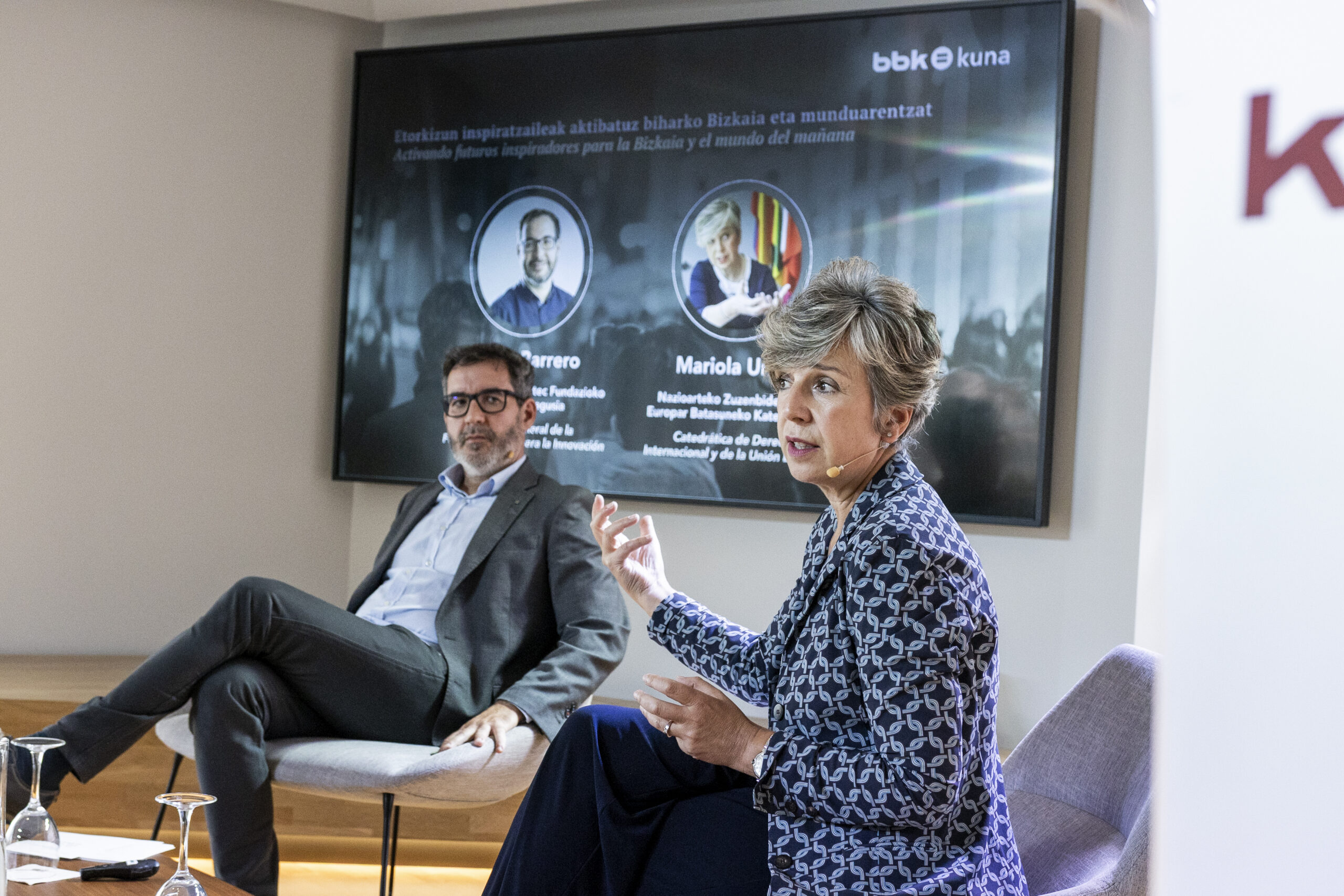
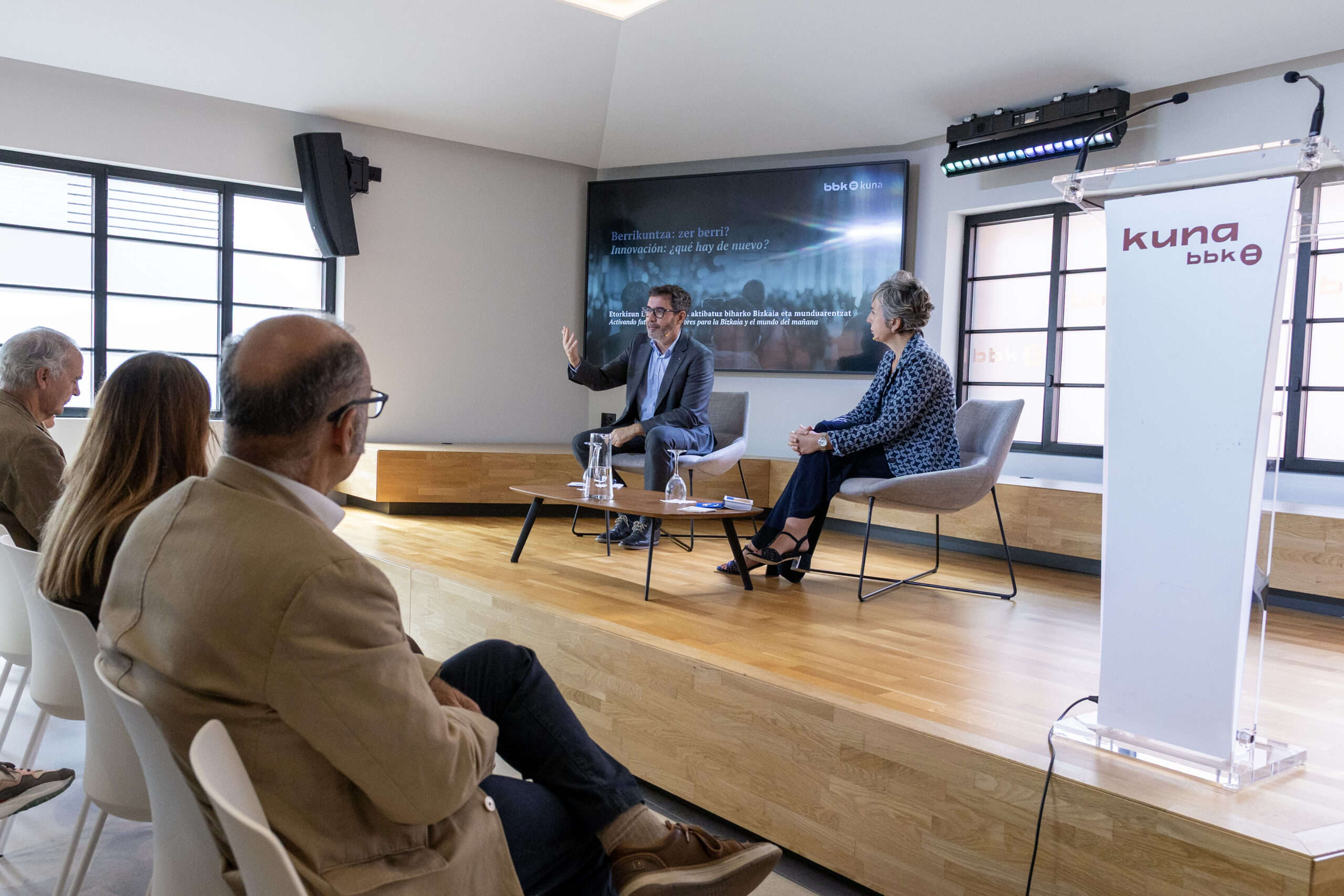
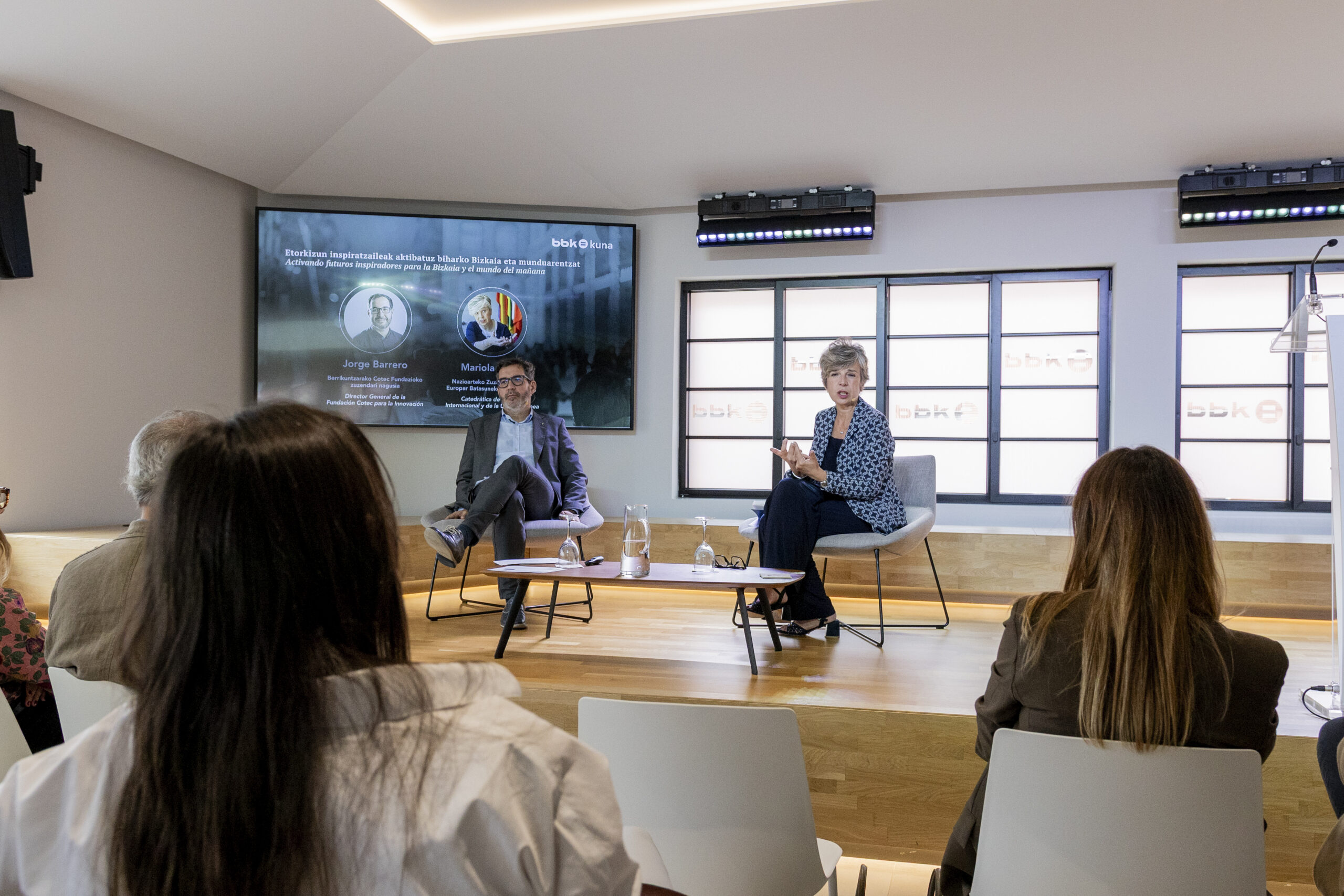
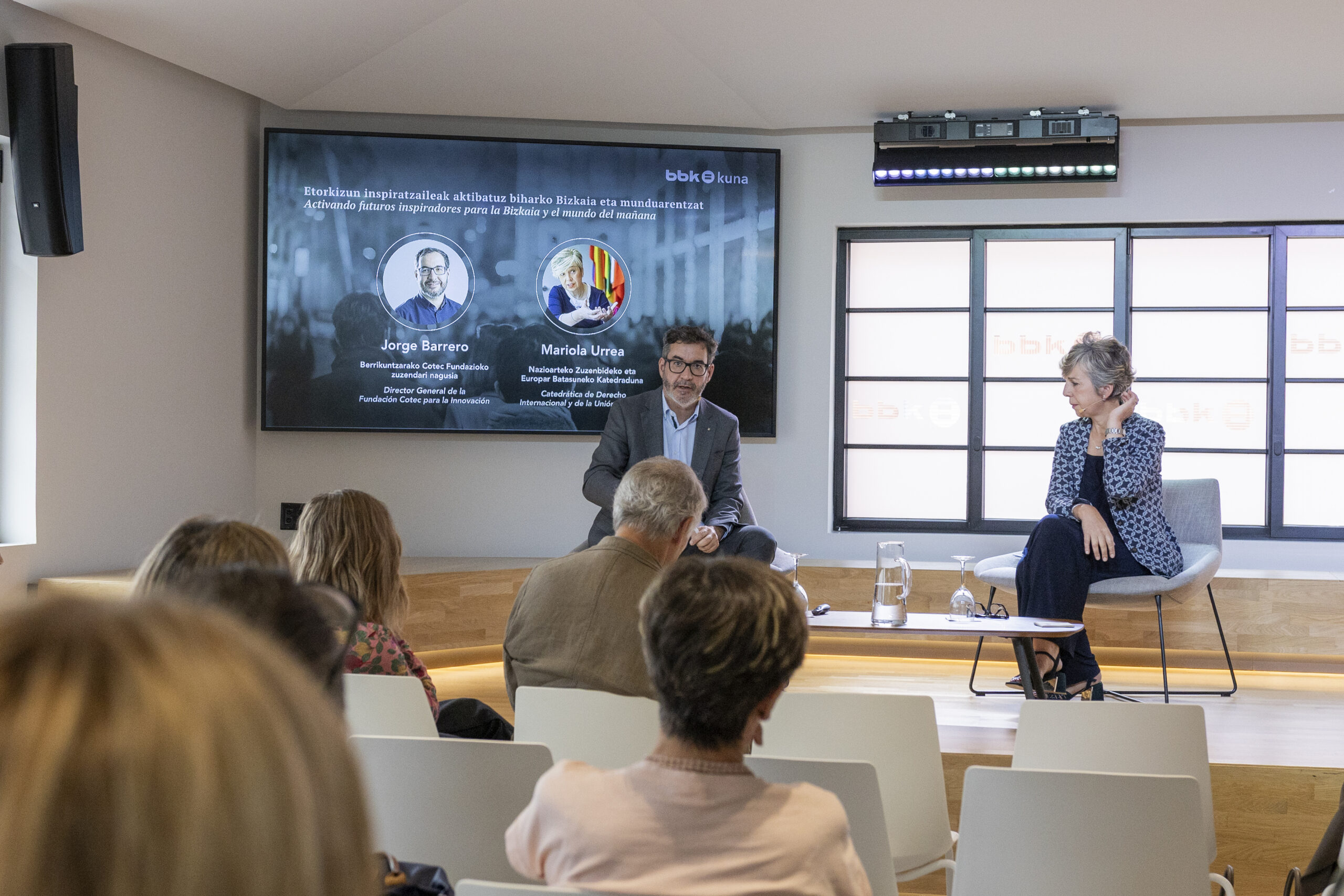
On 10 September, we hosted the third Futuros Inspiradores event at BBK Kuna, a space for dialogue aimed at bringing the major global trends closer to Bizkaia. On this occasion, Jorge Barrero (Director General of the Cotec Foundation for Innovation) and Mariola Urrea (Professor of International and European Union Law) analysed the future of innovation, the impact of AI and the challenges posed by technological transformation in Europe.
A new paradigm for innovation
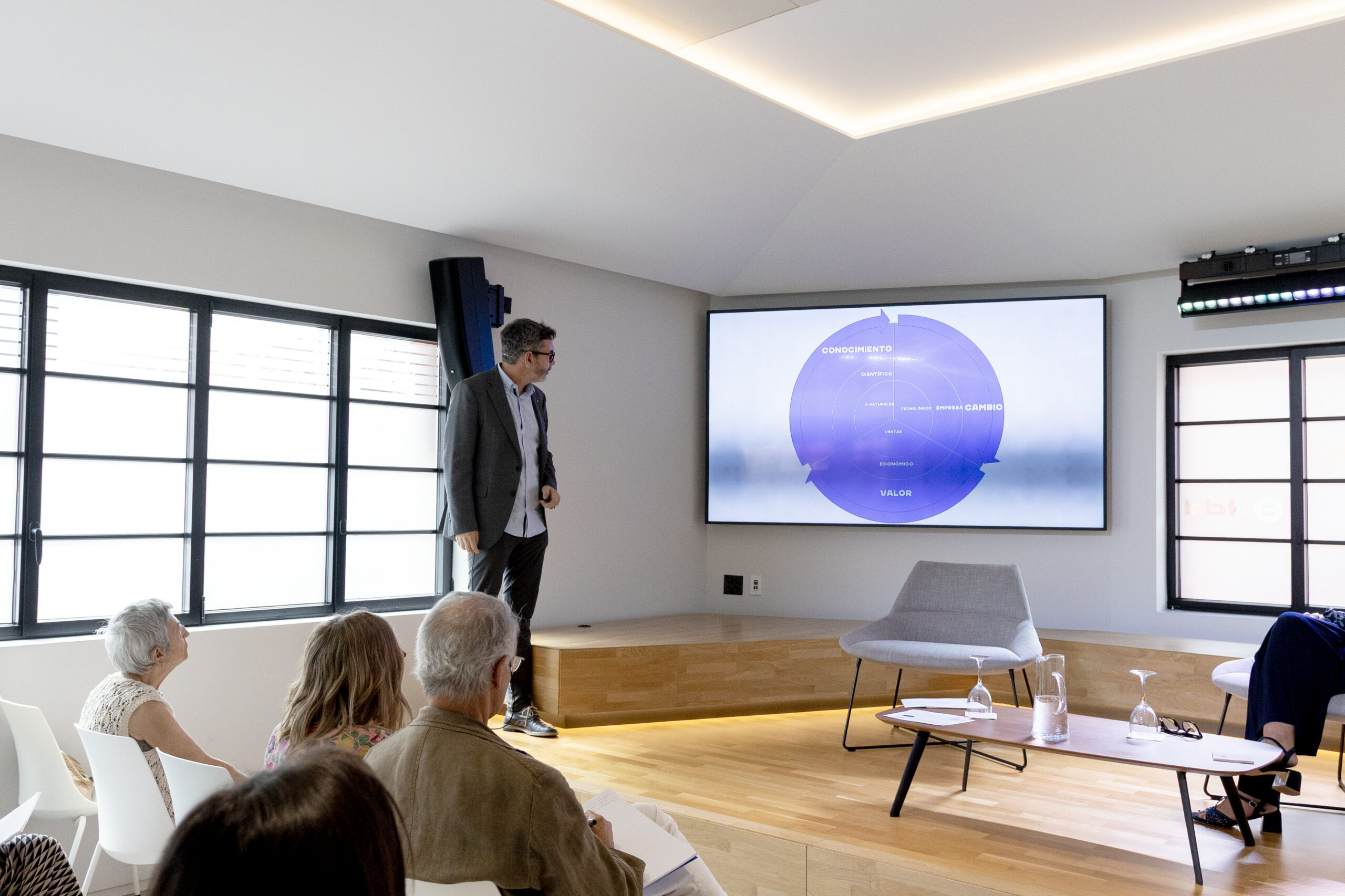
During his presentation, Jorge Barrero recalled that innovation is any change based on knowledge that generates value. However, its traditional view, linked to technology, science and economic benefit, is undergoing a radical transformation. Today, innovation is no longer simply a factor of competitiveness; it has become a geostrategic asset, a vector of sovereignty and an instrument of global power.
The rise of artificial intelligence is accelerating this shift by moving experimentation from the physical to the virtual environment. In addition, as it requires large volumes of data and significant financial resources, AI is driving a transition from an open and collaborative innovation model towards more closed structures concentrated in large corporations. Innovation is therefore undergoing a clear transition from the economic to the geostrategic, from open to closed, and from the physical to the virtual.
The challenge of measuring real impact
The event also addressed the need to renew measurement indicators, moving beyond a quantitative approach in order to understand the real impact on people. To assess the effectiveness of innovation efforts, it is essential to distinguish between the resources and capabilities invested and the results actually achieved.
At local level, the data show that the Basque Country starts from a highly competitive position in terms of the resources invested, thanks to its industrial history, its business network and its infrastructure. However, the reality is that its final results do not reach the level that might be expected given the scale of this investment. Refining the measurement system is therefore essential in order to improve public policies and investment.
Governance, Europe and the human factor
In her analysis of the European perspective and the regulatory framework, Mariola Urrea provided key insights into how this technological acceleration should be addressed from the perspective of law and institutions. She also stressed that governance should not be limited to reactively creating rules that either encourage or hinder innovation, but should provide the appropriate frameworks and concepts to understand the complexity of today’s challenges and guide Europe’s ethical and legal responses.
Mariola Urrea also highlighted that strong and sustained innovation is not the result of chance, but of an ecosystem that integrates it into the social culture. In this regard, she identified the education system as a fundamental pillar, as it is responsible for developing the human capabilities on which genuine innovation depends.
The event demonstrated that the future of innovation depends not only on our ability to develop new technologies, but also on our capacity to anticipate their consequences, establish a robust governance framework and steer progress towards shared goals. With this event, BBK Kuna reaffirms its commitment to connecting global megatrends with the challenges facing Bizkaia.







 Agenda